
Fine-Tuning Large Language Models for Legal Reasoning: Methods & Challenges
The potential of Large Language Models (LLMs) in legal reasoning is both exciting and terrifying.
Let’s face it—most lawyers didn’t go to law school dreaming of being replaced by a soulless algorithm. And yet, here we are, in an era where AI-powered legal assistants are churning out contracts, summarizing case law, and sometimes even fabricating Supreme Court decisions with unwavering confidence. The potential of Large Language Models (LLMs) in legal reasoning is both exciting and terrifying. Done right, they could revolutionize legal research and document drafting. Done wrong, they could land an unsuspecting attorney in front of a disciplinary committee faster than you can say hallucinated precedent.
The road to making AI a reliable legal assistant is riddled with obstacles—linguistic ambiguity, jurisdictional differences, ethical concerns, and the ever-persistent problem of AI hallucinations. But before we get ahead of ourselves, let’s dive into how LLMs are fine-tuned for legal reasoning — a process increasingly referred to as legal LLM fine-tuning — and why that process is just as complicated (and expensive) as a multi-year litigation battle.
The Legal System Meets AI: A Match Made in Algorithmic Hell?
Understanding the Complexity of Legal Reasoning
Unlike the straightforward, rule-based logic AI thrives on, legal reasoning exists in a realm of ambiguity, precedent, and competing interpretations. Statutory language is rarely clear-cut, and case law is a swirling vortex of judicial opinions, dissenting arguments, and legal doctrines that sometimes contradict each other. Even human judges with decades of experience struggle with legal interpretation—so expecting an LLM to wade through this mess without extensive fine-tuning is akin to expecting a first-year law student to write a winning Supreme Court brief.
Legal reasoning isn’t just about what the law says—it’s about how courts have applied it. This requires contextual understanding, analogical reasoning, and a deep grasp of legal principles. Training an AI model to navigate this terrain is not simply a matter of feeding it a few thousand case law snippets and calling it a day.
The AI Hallucination Problem (Or How Your AI Just Lost You a Lawsuit)
Lawyers exaggerate. AI flat-out hallucinates. When LLMs generate responses, they rely on probability-weighted predictions rather than factual accuracy. This means that if an AI isn’t explicitly trained to avoid making things up, it will happily generate fictional case law, complete with fake citations, to support an argument. And nothing ruins an attorney’s credibility faster than citing a landmark case that never existed.
One of the most infamous instances involved a lawyer who unknowingly submitted an AI-generated brief filled with fabricated legal precedents. The result? Judicial embarrassment, professional repercussions, and an important lesson: AI may be a powerful research tool, but it still requires rigorous human oversight.
Methods for Fine-Tuning LLMs for Legal Use
Domain-Specific Training: Teaching AI to Speak Legalese
General-purpose LLMs, like GPT models, are trained on vast swaths of internet text, which, let’s be honest, includes a lot of Reddit arguments and Wikipedia edits by overzealous college students. This is not exactly the legal gold standard. To make AI useful for legal professionals, models need domain-specific training—meaning they must be fine-tuned on high-quality legal texts, statutes, regulations, case law, and legal opinions.
The problem? Legal data is often locked behind expensive paywalls. Westlaw and LexisNexis are not in the business of handing over their meticulously curated databases for free. This forces legal AI developers to either negotiate licensing agreements (which can cost as much as a junior associate’s salary) or rely on publicly available court decisions and government documents, which can be incomplete or inconsistent. Some firms sidestep the paywall problem altogether by fine-tuning open-source LLMs directly on their own case files, trading Westlaw’s breadth for tighter data control and lower recurring costs.
Retrieval-Augmented Generation (RAG): AI’s Cheat Code for Legal Research
Given that no single model can memorize all legal knowledge while remaining up-to-date, Retrieval-Augmented Generation (RAG) has emerged as a critical approach to building retrieval-augmented legal AI that stays current without costly retraining. RAG-enhanced models don’t just rely on their training data; they retrieve relevant legal documents in real-time to inform their responses. This significantly reduces hallucination rates and ensures that AI-generated legal analysis from these legal reasoning models is grounded in actual legal sources, not just statistical guesswork.
The catch? RAG only works as well as the sources it accesses, which is why AI model evaluation for law firms has become an essential step before deployment. If the AI is pulling from outdated, biased, or unreliable legal documents, it will confidently deliver flawed reasoning. Moreover, integrating proprietary databases into AI workflows remains a logistical and financial nightmare. After all, LexisNexis didn’t build its empire on free and open-source ideals.
The Challenges of AI in Legal Reasoning (Or Why Your AI Lawyer Will Still Need a Human Lawyer)
One of the biggest hurdles in AI legal reasoning is jurisdictional specificity. U.S. law is different from U.K. law, which is different from European Union regulations, which are different from—well, you get the point. Training instruction-tuned legal AI to distinguish between them requires an extensive, jurisdictionally segregated dataset, which is neither easy to acquire nor simple to implement.
Another fundamental issue is ethical accountability. AI models don’t bear responsibility for their mistakes—humans do. If an AI system misinterprets a statute or fails to recognize a key precedent, it’s the human lawyer who suffers the consequences. This raises serious concerns central to legal AI compliance, including the unauthorized practice of law, AI-assisted malpractice, and whether using AI in legal work should require explicit disclosure to clients.
The AI Bias Problem: Teaching AI to Not Be a Jerk
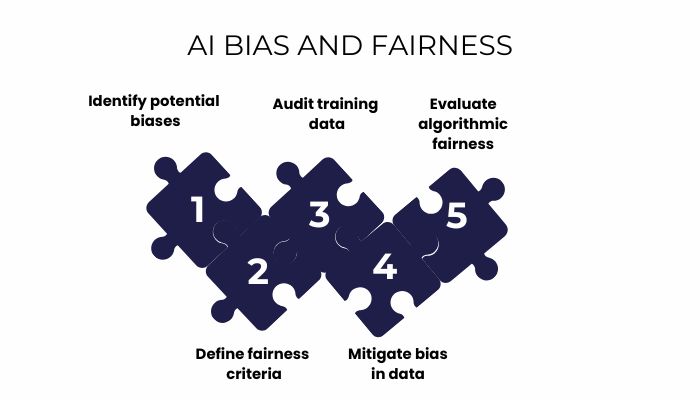
AI models inherit biases from their training data. This is problematic when dealing with a legal system that has a long history of inequitable rulings, systemic discrimination, and evolving social norms. A poorly trained legal AI could reinforce historical injustices, disproportionately favoring certain legal arguments or perpetuating outdated interpretations of the law.
Efforts to mitigate bias in legal AI include careful curation of training data, bias-detection algorithms, and human-in-the-loop review processes. However, bias elimination remains an ongoing struggle, as the legal profession itself is far from free of implicit biases.
The Future of AI in Legal Work: The Robot Lawyers Are Not Coming (Yet)
Despite the hype, AI isn’t replacing lawyers anytime soon. What it can do is handle some of the more tedious aspects of legal work—document review, contract analysis, compliance checks—freeing up lawyers to focus on higher-level reasoning, advocacy, and, of course, billing clients for their valuable expertise.
Courtroom advocacy, judicial reasoning, and client counseling are still firmly in the human domain. AI lacks the ability to read social cues, negotiate settlements, or craft emotionally compelling arguments (at least, for now). More realistically, law firms will integrate AI into their workflows not to replace attorneys, but to enhance their efficiency—though they may, of course, pass those cost savings onto clients in the form of even higher legal fees.
The Legal Profession Survives Another AI Revolution
So, should lawyers start panic-selling their bar licenses? Not quite. The fine-tuning of LLMs for legal reasoning is advancing rapidly, but the technology remains a long way from full autonomy. AI has a role to play in legal research, document automation, and procedural tasks, but when it comes to nuanced legal argumentation, human expertise remains irreplaceable.
AI will continue to be a valuable tool—one that requires careful oversight, rigorous fine-tuning, and a deep understanding of its limitations. And for those worried about AI taking their jobs, rest assured: the only thing more complex than the law itself is making AI understand it.
A fine-tuned model is still, underneath it all, a probabilistic system—something worth keeping in mind alongside our look at deterministic vs. probabilistic reasoning in law AI.

Timothy Carter is a revenue and growth leader focused on turning digital channels into predictable pipeline for law firms and B2B organizations. He covers legal marketing, lead generation, and the practical, governed adoption of AI across professional-services workflows.

Put a legal AI workflow to work — the right way.
Talk through the workflow you want to automate — contract review, drafting, or document intelligence — with a team that ships secure AI for law firms.